
Misión
Ingeniería Agronómica es un programa de excelencia académica, investigativa y de extensión para formar Ingenieros Agrónomos líderes, emprendedores, y humanistas, con fundamentos en la ciencia, tecnología e innovación, capaces de impulsar el desarrollo sostenible en los agroecosistemas tropicales para el mejoramiento de la calidad de vida y la seguridad alimentaria.
Visión
A 2030 el Programa de Ingeniería Agronómica será líder en la formación de profesionales y la generación de conocimiento para la implementación interdisciplinaria de la agronomía que conduzcan al desarrollo sostenible nacional.
Historia
El Programa de Ingeniería Agronómica de la Universidad del Magdalena tiene sus raíces en la profunda transformación socioeconómica que experimentó el departamento del Magdalena y la ciudad de Santa Marta a finales de la década de 1950. El dinamismo derivado de la modernización portuaria, la infraestructura vial y férrea, y el auge de sistemas productivos de alta rentabilidad —como el banano, el algodón, el arroz y la palma africana— evidenció la necesidad imperiosa de contar con un centro de educación superior orientado a respaldar el desarrollo agropecuario regional. En este contexto de visión prospectiva, la Universidad del Magdalena fue constituida mediante la Ordenanza No. 005 de 1958 e inició sus actividades académicas a través del Decreto No. 115 de 1962 con una unidad académica pionera: la Facultad de Agronomía y Zootecnia.
La trayectoria del programa refleja una constante evolución institucional y pedagógica. Inició sus labores lectivas con una cohorte de 48 estudiantes y un cuerpo docente de 12 profesores, bajo una estructura inicial de 16 asignaturas. Ya en 1963 se consolidó un plan curricular reestructurado a cinco años (10 semestres académicos) con 46 asignaturas, graduando a sus dos primeros profesionales en 1968. Posteriormente, en 1969 la unidad pasó a denominarse Facultad de Ingeniería Agronómica y, tras la reestructuración orgánica de la Universidad en 1999, el programa quedó adscrito a la recién creada Facultad de Ingeniería.
En el ámbito curricular, el programa ha adaptado rigurosamente sus contenidos a las exigencias tecnológicas, ambientales, de plurilingüismo y de aprendizaje continuo del entorno. Mediante el Acuerdo Académico No. 19 del 3 de septiembre de 2024, el Consejo Académico aprobó la actualización del plan de estudios, estructurado en un total de 171 créditos académicos distribuidos estratégicamente en las siguientes áreas de formación:
-
Área de Formación en Ingeniería Aplicada: 77 créditos académicos (45.03%)
-
Área de Formación en Ciencias Básicas: 31 créditos académicos (18.13%)
-
Área de Formación en Ciencias Básicas de Ingeniería: 26 créditos académicos (15.20%)
-
Área de Formación General: 18 créditos académicos (10.53%), que incluye los componentes de Fundamentación (8 créditos) y Segunda Lengua (10 créditos en la secuencia General English I-V)
-
Área de Formación Complementaria: 13 créditos académicos (7.60%)
-
Área de Formación en Investigación: 6 créditos académicos (3.51%)
El compromiso histórico del Programa de Ingeniería Agronómica con la calidad y la autorregulación lo llevó a marcar un hito en la Universidad del Magdalena al convertirse, en 2005, en el primer programa de la institución en obtener la Acreditación en Alta Calidad por parte del Ministerio de Educación Nacional (Resolución No. 753). Desde entonces, el programa ha mantenido de forma ininterrumpida este sello de excelencia a través de cuatro renovaciones consecutivas:
-
Resolución MEN No. 2030 de 2010 (otorgada por 4 años).
-
Resolución MEN No. 05042 de 2015 (otorgada por 4 años).
-
Resolución MEN No. 003249 de 2020 (otorgada por 4 años).
-
Resolución MEN No. 016482 del 24 de junio de 2026, mediante la cual se renueva la Acreditación en Alta Calidad por un término de seis (6) años y se renueva de oficio su registro calificado por siete (7) años.
Con más de seis décadas de liderazgo académico, científica investigación aplicada y transferencia tecnológica en el territorio, el Programa de Ingeniería Agronómica reafirma su vocación de formar ingenieros e ingenieras agrónomas líderes, éticos e innovadores, capaces de impulsar la productividad agrícola y la sostenibilidad de los sistemas agroecosistémicos en Colombia y el mundo.
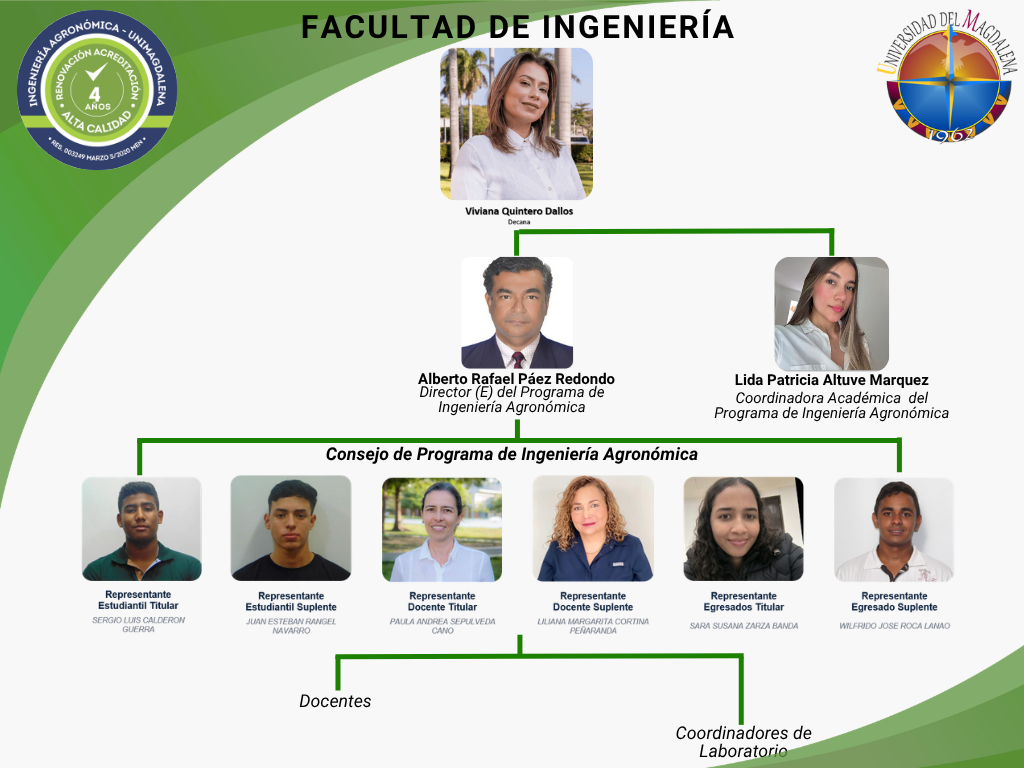
Organigrama
A continuación se presenta el organigrama del programa Ingeniería agronómica
Acreditación
El Programa de Ingeniería Agronomica se encuentra Re - Acreditado por cuarta vez por Alta calidad por un término de 6 años, mediante resolución del Ministerio de Educación Nacional No. 016482 del 24 de junio de 2026.

Normatividad
- Ley 30 de 1992, norma que rige la educación superior en Colombia.
- Decreto 2904 de 1994 y los acuerdos 04 y 06 de 1995 del Consejo Nacional de Educación Superior
- Reglamento Estudiantil - ACUERDO SUPERIOR N°008 DEL 2003 (MARZO 18)
- Estatuto Docente
- Acuerdo Académico 041 DEL 2017
- Acuerdos Académicos y Superiores referentes a los programas, estudiantes y docentes.
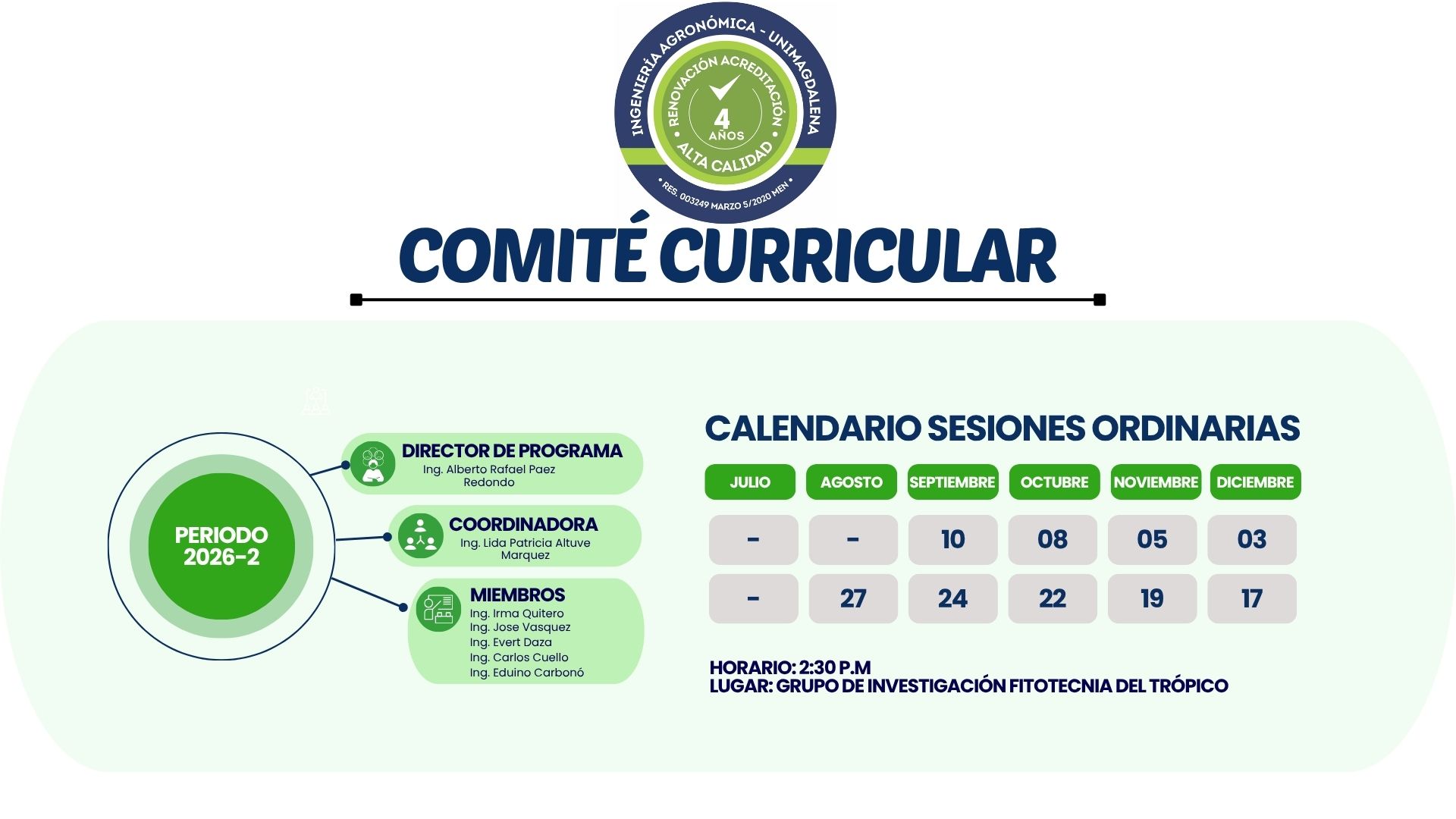
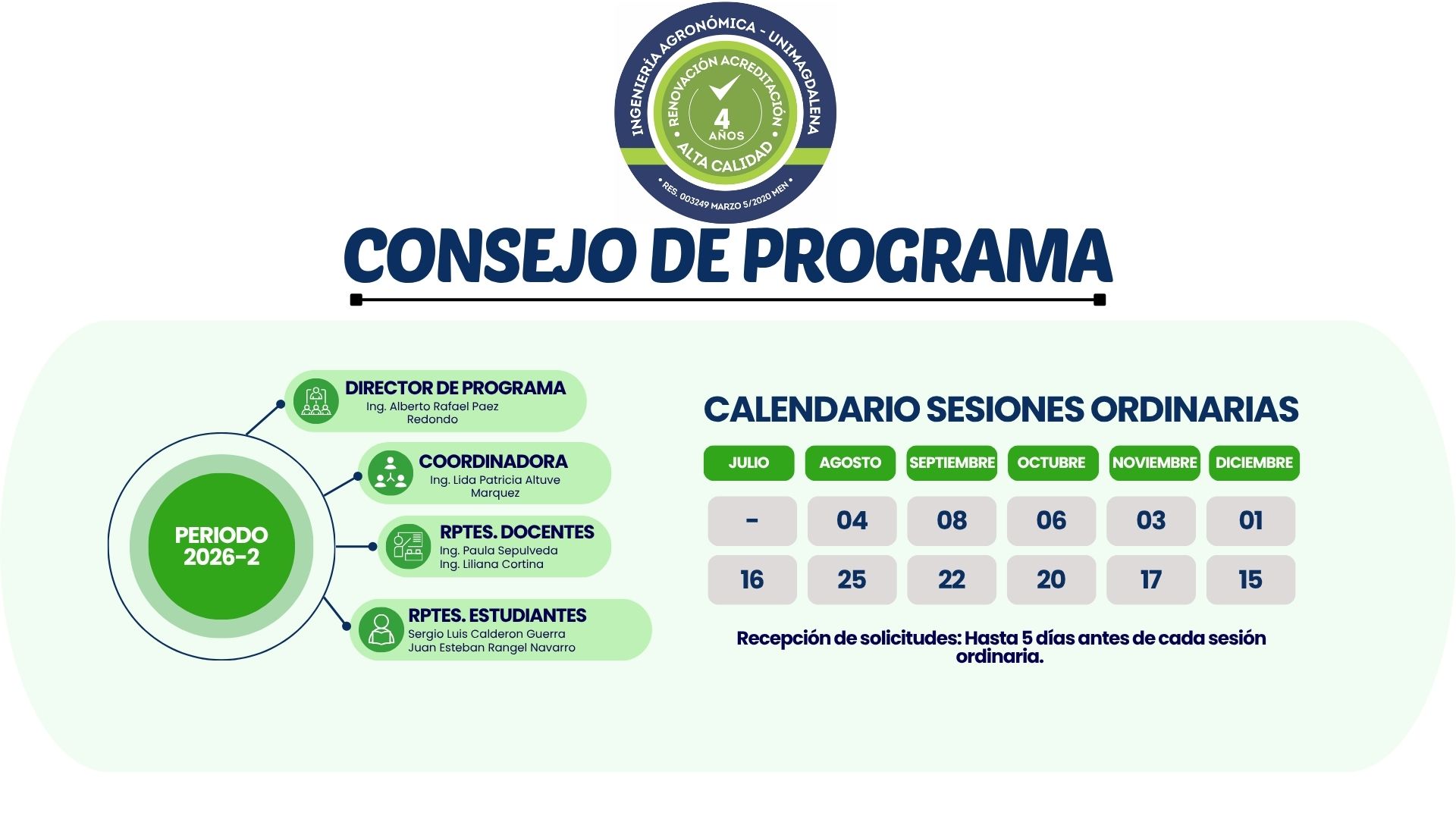
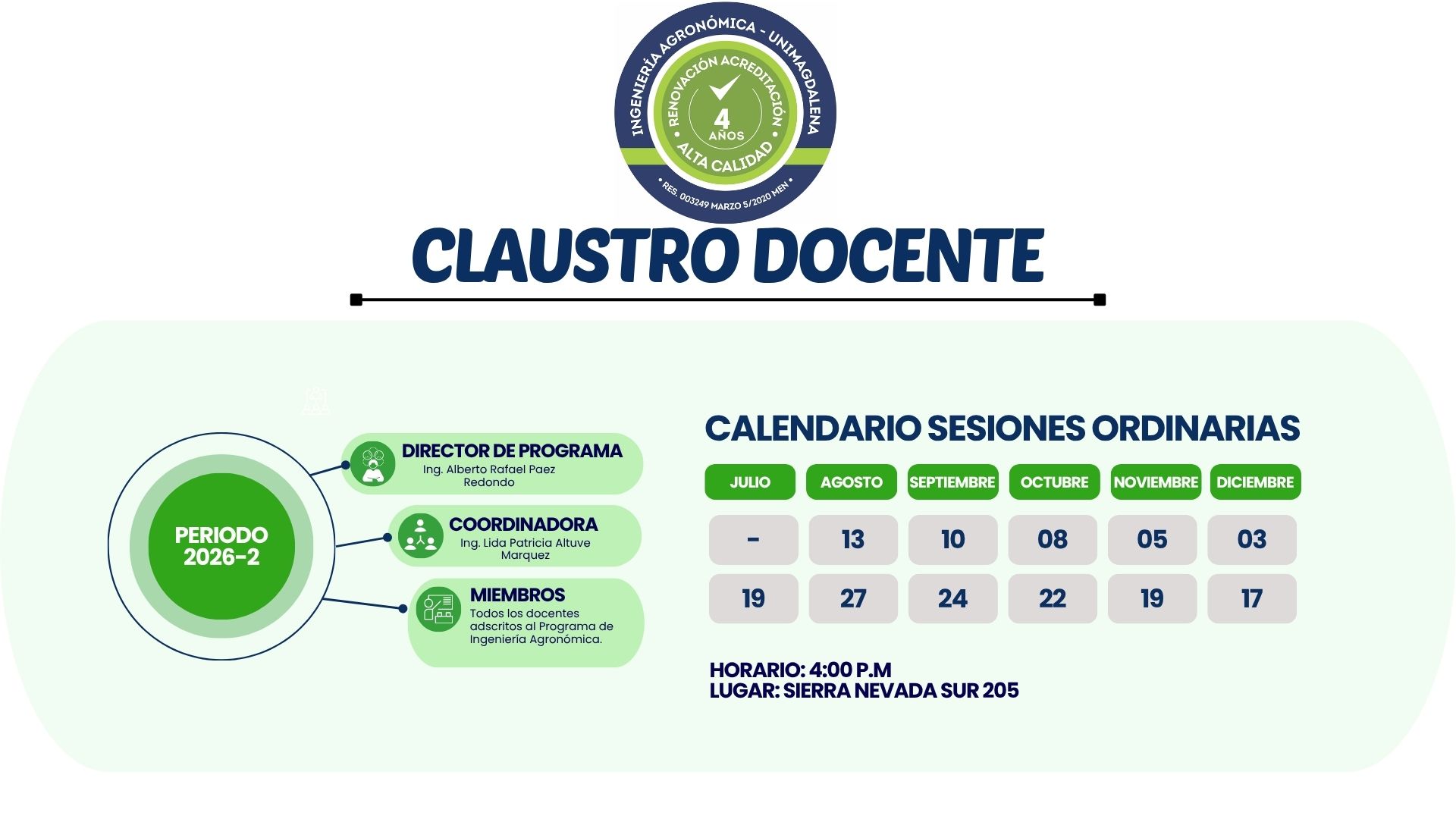
Calendario de actividades
Cronograma de sesiones del Comité Curricular del Programa, Claustros Docentes y del Consejo de Programa, para el periodo académico 2026-2.
Laboratorios
Laboratorio de Fisiología Vegetal
Laboratorio de Biotecnología
Laboratorio de Física de Suelos
Laboratorio de Química de Suelos
Laboratorio de Entomología
Laboratorio de Fitopatología
Cursos libres
Diplomado en MARCHITEZ DE LAS MUSACEAS – Foc-R4T
Fecha de inicio viernes 14 de mayo 2021
Inversión: $ 2.130.000 Profesionales
Intensidad: 120 horas
Horario: Viernes de 5:00 P.M a 9:00 P.M y los sábados de 7:00 A.M a 1:00 P.M
MÓDULOS TEMÁTICOS
1. Introducción al Diplomado. Marchitez de las musáceas: generalidades, historia, Razas del hongo y especies de musáceas. Evolución de la enfermedad en el espacio y tiempo.
2. Reconocimiento de la Marchitez de las musáceas: síntomas en campo, variabilidad de síntomas, similitudes y diferencias con otros problemas sanitarios. Sistema de monitoreo en campo para muestro para diagnóstico (normas de bioseguridad), y situación actual de la enfermedad en Colombia (investigación)
3. Diagnóstico de la enfermedad e identificación del patógeno: importancia de la detección temprana. Técnicas de aislamiento del hongo, purificación, indexaciones. Identificación molecular (protocolos utilizados).
4. El hongo Fusarium oxysporum sp. cubense Raza 4 tropical. Características de la especie, las formas especiales, las razas fisiológicas, Diferenciación de la raza 4 tropical, grupos de compatibilidad vegetativa.
5. Genotipos de musáceas y patogenicidad de Foc R4T. Viabilidad de resistencia genética en genotipos comerciales.
6. Aspectos epidemiológicos de la Marchitez de las musáceas: ciclo de vida, ciclo biológico del hongo, fuente de inóculo (sobrevivencia), arvenses, dispersión, interacciones con otros microorganismos.
7. Papel de insectos – plagas y arvenses hospedantes del insecto, en la presencia y desarrollo de la enfermedad. Medidas de manejo.
8. Prevención de la enfermedad. Aplicación de herramientas para contención de la enfermedad (bioseguridad), protocolos para Material de siembra, viveros y fincas. Protocolos e insumos recomendados
9. Prevención de la enfermedad. El manejo integrado del cultivo enfocado a la prevención y contención de la enfermedad y aseguramiento de la producción.
10. La biorregulación como opción de manejo de la Marchitez de las musáceas. Aplicación para Foc –R4T.
11. Impacto de la Marchitez asociada a Foc-R4T en el contexto internacional: efecto sobre exportaciones y producción nacional. Control legal, regulación fitosanitaria asociada.
12. Presentación de casos de estudios relacionados con Foc-R4T. Retroalimentación y recomendaciones.
Matriculas abiertas del viernes 30 de Abril al 7 de Mayo 2021
Informes e inscripciones: Facultad de Ingeniería- Programa de Ingeniería Agronómica PBX: 4381000 Ext. 2427 y Centro De Desarrollo Agrícola Y Forestal PBX: (57-5) 4217940 EXT 1198.
Docentes
Alberto Rafael Paez Redondo, PhD (c) / Unimagdalena
Gloria Patricia Castillo Urquiza, PhD / Unimagdalena - Agrosavia C.I Caribia
Mónica Betancourth Vásquez, PhD/Agrosavia C.I Tibaitata
Dayana Andrea Vásquez Barajas, MSc / Asbama, Santa Marta
Sebastián Zapata Henao, MSc / Augura
Andrea Amalia Ramos Portilla, PhD/ ICA, Dirección Técnica De Sanidad Vegetal
Antonio José González Ulloa, MSc (formación) / SAB – Tecbaco
Helena Del Rosario Bornacelly Horta, MSc / Augura
Julieth Lizcano Prada, PhD / Unimagdalena
Organiza: Programa de ingeniería Agronómica Universidad Del Magdalena
Apoya: ASEIAGRO
https://forms.office.com/Pages/ResponsePage.aspx?id=G85p_cYg7EK1Tm0bOHCsbjo_m30vxA5Agir48n7nuPZUOVZWT1c1MjBNNzdRR1JCWUlMTlhLQlhaNi4u
Objetivos educativos del programa
Objetivos Educativos del Programa
- Los graduados de Ingeniería Agronómica desempeñarán su profesión con responsabilidad, ética, fundamento científico y tecnológico, espíritu innovador y competitivo.
- Los graduados de Ingeniería Agronómica serán capaces de generar ambientes propicios para el aprendizaje autónomo y continuo, contribuyendo al desarrollo de su disciplina y al mejoramiento de la calidad de vida. so eficiente de los recursos naturales y tecnológicos para contribuir al logro de los Objetivos de Desarrollo Sostenible.
The Program Educational Objectives (PEOs) are:
- Graduates will practice Agronomic Engineering with ethical responsibility, strong scientific and technological foundations, an innovative mindset, and professional competitiveness.
- Graduates will promote autonomous and lifelong learning to advance the discipline and professional practice while responding to regional needs
Estadísticas históricas de datos de inscripción y graduación
|
Período |
2022-II |
2023-I |
2023-II |
2024-I |
2024-II |
2025-I |
2025-II |
2026-I |
|
Inscritos |
143 |
192 |
180 |
155 |
117 |
177 |
153 |
110 |
|
Admitidos |
45 |
58 |
68 |
67 |
68 |
75 |
68 |
68 |
|
Nuevos Matriculados |
44 |
57 |
68 |
66 |
66 |
74 |
67 |
66 |
|
Graduados |
47 |
25 |
42 |
24 |
21 |
61 |
31 |
24 |
|
Period |
2022-II |
2023-I |
2023-II |
2024-I |
2024-II |
2025-I |
2025-II |
2026-I |
|
Applicants |
143 |
192 |
180 |
155 |
117 |
177 |
153 |
110 |
|
Admitted Students |
45 |
58 |
68 |
67 |
68 |
75 |
68 |
68 |
|
Newly Enrolled Students |
44 |
57 |
68 |
66 |
66 |
74 |
67 |
66 |
|
Graduates |
47 |
25 |
42 |
24 |
21 |
61 |
31 |
24 |
Resultados del estudiante
Resultados de Aprendizaje del Programa
1. Habilidad para identificar, formular y resolver problemas complejos de ingeniería aplicando principios de ingeniería, ciencias y matemáticas.
2. Habilidad de aplicar el diseño de ingeniería para producir soluciones que satisfagan necesidades específicas teniendo en cuenta la salud pública, la seguridad y el bienestar, así como factores globales, culturales, sociales, ambientales y económicos.
3. Habilidad de comunicarse de manera efectiva con una variedad de audiencias.
4. Habilidad para reconocer responsabilidades éticas y profesionales en situaciones de ingeniería y hacer juicios informados, que deben considerar el impacto de las soluciones de ingeniería en contextos globales, económicos, ambientales y sociales.
5. Habilidad de funcionar eficazmente en un equipo cuyos miembros juntos brindan liderazgo, crean un entorno colaborativo, establecen metas, planifican tareas y cumplen objetivos.
6. Habilidad para desarrollar y realizar la experimentación adecuada, analizar e interpretar datos y utilizar el juicio de ingeniería para sacar conclusiones.
7. Habilidad de adquirir y aplicar nuevos conocimientos según sea necesario, utilizando estrategias de aprendizaje adecuadas.
These Student Outcomes correspond to the Student Outcomes defined by ABET.
These Student Outcomes correspond to the Student Outcomes defined by ABET.
- An ability to identify, formulate, and solve complex engineering problems by applying principles of engineering, science, and mathematics.
- An ability to apply engineering design to produce solutions that meet specified needs with consideration of public health, safety, and welfare, as well as global, cultural, social, environmental, and economic factors.
- An ability to communicate effectively with a range of audiences.
- An ability to recognize ethical and professional responsibilities in engineering situations and make informed judgments, which must consider the impact of engineering solutions in global, economic, environmental, and societal contexts.
- An ability to function effectively on a team whose members together provide leadership, create a collaborative environment, establish goals, plan tasks, and meet objectives.
- An ability to develop and conduct appropriate experimentation, analyze and interpret data, and use engineering judgment to draw conclusions.
- An ability to acquire and apply new knowledge as needed, using appropriate learning strategies.